Directors and Officers (D&O) Insurance: What Every Company Should Know
Introduction
Running a company means making decisions — hundreds of them, every day. Some are routine. Others are significant. And a small but consequential number will be scrutinised, challenged, and potentially litigated by shareholders, regulators, employees, creditors, or competitors who believe those decisions caused them harm.
Directors and Officers insurance, universally known as D&O insurance, exists to protect the individuals who lead companies from the personal financial consequences of such challenges. It is one of the most important and least understood categories of corporate insurance — essential for publicly listed companies, increasingly expected by investors in private companies, and critically relevant for the directors of non-profit organisations and startups alike.
This article explains what D&O insurance is, who it protects, what it covers, how it works in the Indian context, and why no company that takes its governance seriously should operate without it.
What Is D&O Insurance?
Directors and Officers insurance is a liability insurance product that protects the personal assets of a company’s directors and officers against claims arising from their managerial decisions and actions taken in their professional capacity. It also typically covers the company itself for the costs of indemnifying its directors and officers when it is legally and financially able to do so.
The fundamental premise of D&O insurance is straightforward. When a person accepts a role as a director or senior officer of a company, they assume personal legal responsibility for the decisions they make in that role. If those decisions lead to financial losses for shareholders, if they violate regulations, if they constitute a breach of fiduciary duty, or if they harm employees or creditors, the individuals concerned can be personally sued. Without D&O insurance, they would face those claims from their personal savings, investments, and assets.
D&O insurance transfers this personal financial risk to the insurer, allowing directors and officers to make business decisions with appropriate confidence rather than with excessive personal caution driven by fear of personal liability.
Who Needs D&O Insurance?
The short answer is: any organisation with a board of directors or senior officers who make decisions that affect others. This is a far broader category than many people assume.
Publicly listed companies are the most obvious users of D&O insurance. The exposure of listed company directors to shareholder litigation, securities law claims, and regulatory enforcement is well established and can involve enormous sums. D&O insurance is essentially non-negotiable for any company listed on the BSE or NSE.
Private companies face growing D&O exposure as well, particularly as they take on institutional investors. Venture capital and private equity investors routinely require D&O coverage as a condition of investment, understanding that disputes between investors and management are not uncommon as a company grows, pivots, or faces adversity. For any Indian startup that has raised institutional funding or is planning to, D&O insurance is effectively a requirement.
Non-profit organisations and trusts, including educational institutions, hospitals, charities, and industry associations, are frequently overlooked in D&O discussions. Their trustees and directors face the same personal liability exposure as their corporate counterparts — sometimes more, because non-profit governance standards are often less developed and the organisations are subject to unique regulatory obligations. A trustee of a charitable trust who makes a financial decision that is later challenged by beneficiaries or regulators faces real personal risk that D&O insurance is designed to address.
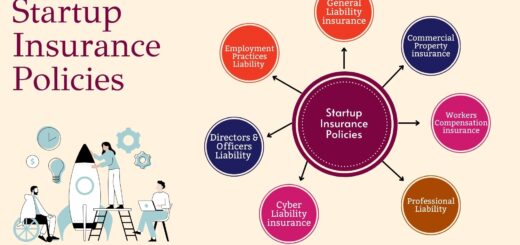
Startups and early-stage companies often believe D&O insurance is a concern for later, more mature stages of their development. This is a dangerous misconception. The early stage is precisely when governance is most informal, decisions are made quickly under uncertainty, and the potential for disputes between founders, investors, and employees is highest. Several high-profile Indian startup disputes in recent years have involved personal liability claims against founders and early directors, underlining the importance of D&O protection from the earliest stages.
What Does D&O Insurance Cover?
A standard D&O policy is structured around three coverage components, commonly referred to as Side A, Side B, and Side C.
Side A Coverage protects individual directors and officers directly when the company is unable or unwilling to indemnify them. This might occur because the company is insolvent, because applicable law prohibits indemnification in the specific circumstances, or because the company’s articles of association do not provide for indemnification. Side A coverage is the most critical component because it is the last line of protection for the individual’s personal assets.
Side B Coverage reimburses the company when it has indemnified its directors and officers following a claim. When a company advances legal defence costs or pays a settlement on behalf of a director or officer, Side B coverage repays those amounts to the company. This protects the company’s balance sheet from the financial burden of indemnifying its leadership.
Side C Coverage, also called entity coverage, protects the company itself against securities claims — allegations that the company made misleading statements in connection with the purchase or sale of its securities. Side C is most relevant for publicly listed companies facing shareholder class action suits and is less commonly included in policies for private companies.
In addition to these structural components, D&O policies cover legal defence costs, which are typically the largest financial consequence of a D&O claim even when no damages are ultimately awarded. Defending complex corporate litigation in India or across multiple jurisdictions can cost crores of rupees in legal fees, and D&O insurance covers these costs from the moment a claim is made.
Common Claims That Trigger D&O Insurance
Understanding the types of claims that give rise to D&O coverage helps directors and officers appreciate the practical importance of this insurance.
Shareholder derivative suits are among the most common D&O claims globally. Shareholders who believe the board has acted against the company’s interests — through poor acquisitions, financial mismanagement, or breach of fiduciary duty — can sue directors personally for the resulting losses. In India, the Companies Act 2013 significantly expanded the rights of shareholders to hold directors accountable, including through class action suits under Section 245.
Regulatory investigations and enforcement actions are a growing source of D&O exposure in India. The Securities and Exchange Board of India, the Serious Fraud Investigation Office, the Enforcement Directorate, the Competition Commission of India, and sector-specific regulators such as IRDAI and RBI all have powers to investigate and take action against corporate directors for regulatory violations. The cost of responding to and defending regulatory investigations is substantial and is covered by D&O insurance.
Employment-related claims by senior employees — alleging wrongful termination, discrimination, harassment, or breach of employment contract — are frequently directed at individual directors and officers rather than the company alone. D&O policies can be extended to cover these employment practices liability claims.
Creditor claims are particularly relevant in insolvency situations. Under the Insolvency and Bankruptcy Code 2016, directors of insolvent companies can face personal liability if found to have engaged in fraudulent trading, preferential transactions, or wrongful trading in the period leading up to insolvency. D&O insurance can cover the costs of defending these claims.
Misrepresentation in fundraising documents — prospectuses, information memoranda, investor presentations — is another significant source of D&O exposure. If investors allege they were misled into investing based on inaccurate or incomplete information, directors can face personal liability for those misrepresentations.
D&O Insurance in the Indian Context
The D&O insurance market in India has grown substantially over the past decade, driven by increasing corporate governance standards, a more assertive regulatory environment, and the maturing of the Indian startup and private equity ecosystem. However, penetration remains lower than in more developed insurance markets, and many Indian companies — particularly smaller private companies and non-profits — remain dangerously underinsured.
The Companies Act 2013 was a watershed moment for D&O liability in India. It introduced stricter fiduciary duty standards for directors, expanded personal liability provisions, strengthened minority shareholder rights, and gave regulators broader powers to hold directors accountable. These legislative changes materially increased the legal exposure of Indian directors and made D&O insurance significantly more important.
The SEBI Listing Obligations and Disclosure Requirements Regulations, applicable to listed companies, impose detailed governance and disclosure obligations on directors. Failures in compliance — even inadvertent ones — can give rise to regulatory action and personal liability. For the independent directors of listed companies, who often have limited operational involvement but full legal accountability, D&O coverage is essential.
Several high-profile corporate governance failures in India in recent years — involving companies across sectors from infrastructure to financial services — have resulted in significant personal liability exposure for directors. These cases have served as powerful reminders to the Indian corporate community that directorship carries genuine personal risk.
Key Policy Features to Evaluate
When evaluating a D&O policy, several features deserve careful attention beyond the headline premium and coverage limit.
The retroactive date determines how far back in time the policy covers claims arising from past acts. A policy with a retroactive date of the company’s incorporation date provides the broadest historical coverage, while a more recent retroactive date leaves the company exposed for earlier decisions.
The definition of insured persons should be reviewed carefully. In addition to formally appointed directors and officers, many D&O policies extend coverage to shadow directors, de facto directors, committee members, and in some cases senior managers below board level. Ensuring the policy covers all individuals with meaningful decision-making authority is important.
The policy’s response to insolvency is critical. If the company becomes insolvent — precisely the scenario in which directors face the greatest personal exposure — will the D&O insurer still respond? Some policies contain provisions that could be triggered by insolvency events. Understanding how the policy behaves in a worst-case scenario is essential.
Jurisdictional coverage matters for companies with cross-border operations or directors who are citizens of foreign countries. D&O claims can arise in multiple jurisdictions simultaneously, and the policy should provide coverage across all relevant geographies.
How Much Does D&O Insurance Cost in India?
D&O premiums in India vary considerably based on the size and complexity of the company, its industry sector, its ownership structure, its claims history, the coverage limits selected, and current market conditions. For a small to mid-sized private company, a D&O policy with a coverage limit of five crore rupees might cost between one and three lakh rupees annually. For a larger private company with institutional investors, premiums might range from three to ten lakh rupees or more. Listed company D&O premiums are typically significantly higher, reflecting greater regulatory and litigation exposure.
These amounts should be evaluated against the potential personal financial exposure of the directors and officers being covered. A regulatory investigation alone can generate legal costs running into crores of rupees. Against that backdrop, a D&O premium represents a highly cost-effective form of personal financial protection.
Final Thoughts
The individuals who lead companies take on enormous responsibility — and, increasingly, enormous personal legal risk. Directors and Officers insurance is the mechanism by which that personal risk is managed, allowing talented people to take on leadership roles and make necessary business decisions without fear of personal financial ruin if those decisions are later challenged.
For Indian companies at every stage of development, in every sector, D&O insurance deserves a place at the top of the insurance priority list. It protects your leaders, strengthens your governance, satisfies your investors, and sends a clear signal that your organisation takes its responsibilities seriously.